
Tracking down a leak under the sink
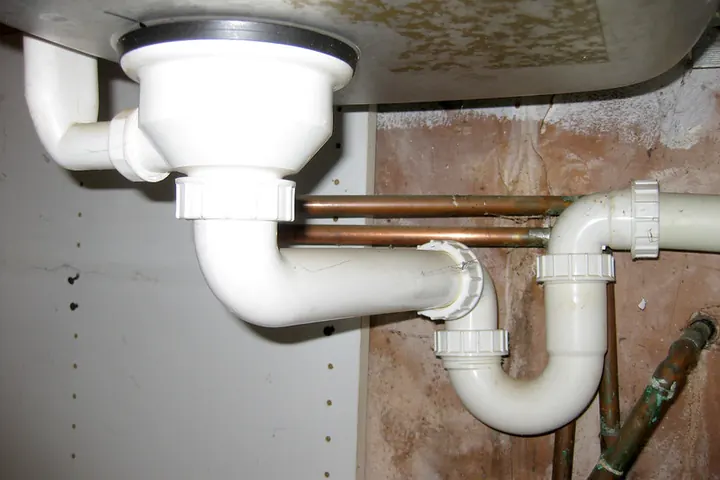
Dry everything, then run the water and watch. Leaks at the trap usually mean a loose or worn slip joint. Leaks at the valves or supply lines mean worn parts that should be replaced. A swollen cabinet floor is a sign the leak has been going a while.

Under-sink leaks are sneaky. The cabinet is dark, full of cleaning supplies, and rarely looked at. By the time most people notice, the bottom of the cabinet is stained or swollen.
Find the source
Empty the cabinet and dry every pipe and connection with paper towels.
- Run the faucet, cold then hot, and watch the valves and supply lines.
- Fill the sink and let it drain, and watch the trap and drain pipes.
- Run the dishwasher if it connects there, and watch the hose.
The paper towel will show where drips land, which helps when the leak is slow.
A leak that only shows up while the faucet runs is usually at the faucet or a supply line. One that shows up as the sink drains is at the drain.
Common culprits
Supply lines. Old rigid or plastic supply lines crack and corrode. Braided lines can bulge with age.
Shutoff valves. Old multi-turn valves leak at the stem or will not shut off fully.
Slip joints. The nuts on the trap loosen or the washers inside wear out.
Faucet base. Water seeping under a faucet base drips down onto everything below.
Disposal. A leak from the disposal body means it needs replacing.

What you can do
Hand-tighten a loose slip nut on a plastic trap. If it still drips, the washer inside needs replacing.
Supply lines
Old plastic, vinyl or chrome supply tubes harden and crack. Braided stainless lines are much more durable. Most manufacturers recommend replacing them every five years or so.
When replacing, match the connection sizes: most faucets use 3/8-inch compression at the valve and 3/8 or 1/2 at the faucet, but some faucets have their own built-in lines. Hand-tighten, then snug the nut about a quarter turn with a wrench. Overtightening cracks the fittings.
Shutoff valves
Many Rosemead homes from the 1950s and 1960s still have their original multi-turn shutoffs. They often drip from the stem when turned, or do not fully close. Quarter-turn valves are more reliable.
Changing a valve means shutting off water to the house, so it is a good moment to change both hot and cold valves and the supply lines at once.
Drain connections
A leak at a slip joint can often be fixed by loosening the nut, realigning the pipe, and retightening. If the washer is cracked, replace it.
Metal traps corrode from the inside; if a chrome trap is rusting through, replace it with PVC. Leaks at the sink drain flange call for new plumber's putty under the flange.
Faucet leaks
Water running down the faucet body into the cabinet points to a worn O-ring or cartridge at the base of the spout or handle. Pull-down kitchen faucets often leak at the hose connection under the sink.
Water damage
Particleboard cabinet bottoms swell and fall apart once wet. If the bottom is soft, cut a piece of plywood or a plastic cabinet liner to fit. A mat under the sink catches drips and makes leaks easy to spot. Leak sensors are inexpensive and can alert your phone.


Our steps:
- Find the source with dry paper towels and a flashlight
- Shut off water at the valves or the main
- Replace failed lines, valves or washers
- Restore water and check every joint
- Dry the cabinet and confirm no further leaks
Particleboard cabinet floors swell and crumble when they stay wet. Check for soft spots, mold or a musty smell. Once the leak is fixed, a damaged cabinet floor can usually be cut out and replaced with a new panel; see doors and cabinets.
Related jobs
If the disposal is the culprit, see garbage disposal jams and replacement. Toilet supply lines have the same problems; see running toilets.
Dishwasher connections
Dishwashers connect under the kitchen sink with a supply line and a drain hose. The drain hose should loop up high or go through an air gap before connecting to the disposal or drain. Without that, dirty sink water can siphon back into the dishwasher.
A leak at the dishwasher supply often shows up as water at the front edge of the dishwasher, not under the sink, so check both places. The supply valve for the dishwasher is often a separate valve on the hot line.
Slab homes
Many Rosemead ranch homes sit on concrete slabs with water lines below or in the slab. A leak in a slab line shows up as warm spots on the floor, the sound of running water when nothing is on, or a water meter that keeps spinning. That is a different job from an under-sink leak, and finding it gets its own free estimate.
How we fix an under-sink leak
We find the source, then replace worn supply lines with braided stainless lines, swap old shutoffs for quarter-turn valves, and reset or replace trap parts. We check the faucet base and the disposal while we are there. After any repair under the sink, a dry paper towel under the connections makes a slow drip easy to spot the next day. See minor plumbing.
Prevention
Look under each sink every few months. Replace supply lines about every five years (Fluidmaster recommends swapping any connector older than that), and keep the cabinet floor clear enough that you would notice a drip.
When you want it done for you, our plumbing repairs page lists the jobs we take and what to send for a quote. More on the houses themselves: repair notes for postwar Rosemead homes.
Need a hand with this?
Call or text (310) 628-9399, Mon–Sat 8:30 AM–7 PM. A photo is usually enough for a free estimate.
Call or text for a free estimate