
A toilet that runs, hisses or refills on its own
Most running toilets come down to a worn flapper, a fill valve set too high, or a chain that is too short or too long. A dye test tells you which. Hard water in Rosemead wears these parts faster, so replacing both the flapper and fill valve together is often the best fix.

A running toilet wastes water around the clock and makes a sound you stop noticing until the water bill arrives. In Rosemead's 1950s ranch homes, many toilets have been replaced at least once, but the parts inside the tank still wear out on their own schedule.
How to tell what is wrong
Take off the tank lid and watch a full flush.
- Water spilling into the overflow tube means the fill valve is set too high or not shutting off.
- The toilet refills every so often without a flush usually means water is slowly leaking past the flapper.
- The handle has to be jiggled often means the chain is tangled, too short or too long.
Why it happens
Hard water. Rosemead's water carries a fair amount of minerals. Scale builds on the flapper seat and inside the fill valve, so seals stop sealing.
Rubber ages. Flappers warp and harden over the years, and some tank cleaning tablets speed that up.
Mismatched parts. A replacement flapper that is the wrong size for the flush valve will never seal completely.

What you can try
Check the chain first. It should have a little slack, about half an inch, with the flapper closed. Adjust the float on the fill valve so the water stops about an inch below the top of the overflow tube.
When the toilet keeps running
- The dye test shows a leak even with a new flapper
- The fill valve keeps hissing or will not shut off
- Water is leaking at the base of the toilet or from the tank bolts
- The shutoff valve behind the toilet will not turn or drips
Finding the leak with food coloring
A toilet can leak silently. If color shows up in the bowl, water is leaking past the flapper.
This is the most common cause of a toilet that refills on its own every so often, called phantom flushing. A leaking flapper can waste a lot of water over a month and shows up on the water bill.


Flapper problems
Flappers harden, warp and collect mineral scale. When replacing one, take the old flapper to the store or note the brand of the toilet, because flappers come in 2-inch and 3-inch sizes and different shapes. Clean the flush valve seat with a scouring pad before installing the new flapper; a rough seat leaks even with a new flapper.
Adjust the chain so it has a little slack when the flapper is closed. Too tight and the flapper cannot seal; too loose and the chain can get trapped underneath.
Fill valve problems
Old ballcock valves with a float on an arm are noisy and unreliable.
A modern fill valve with a float cup that slides up and down the shaft usually adjusts to tank height.
Our steps:
- Turn off the shutoff valve and flush to empty the tank
- Sponge out remaining water and disconnect the supply line
- Remove the old fill valve with the nut under the tank
- Install the new valve, set its height and connect the refill tube
- Reconnect the supply, turn water on and set the water level
When the handle is the problem
A handle that sticks down or has to be jiggled often has a corroded nut, a bent arm, or a chain catching. Replacing the handle is a simple fix. Make sure the arm does not rub the tank lid.
Older toilets
Toilets from before the mid-1990s may use 3.5 gallons or more per flush. If your toilet keeps needing parts or does not flush well, replacing it can be worthwhile.
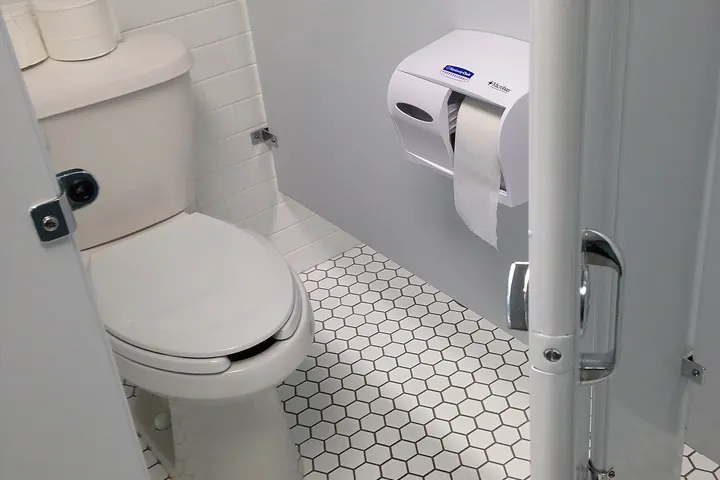

Check the shutoff valve too; old valves under Rosemead toilets often fail when turned. See under-sink leaks and supply lines.
Hard water
Mineral deposits from hard water can build up on fill valves and flappers, causing them to leak sooner. Our hard water buildup guide covers more.
Weak or double flushes
If you have to hold the handle down or flush twice, the flapper may be closing too early, or the water level is set too low. Raise the level to the mark on the overflow tube. Clogged rim holes under the bowl rim also weaken a flush; clean them with a small wire or mirror and brush.
How we fix a running toilet
We shut off the water and drain the tank. Then we replace the flapper with one sized to your flush valve, swap the fill valve if it is scaled up, and clean the flush valve seat. If the shutoff valve or supply line is old, we replace those too.
We finish by setting the water level and checking for leaks. See minor plumbing for what else we handle.
Keeping it quiet
Listen for refilling at night when the house is quiet. Catching a slow flapper leak early saves a lot of water.
When you want it done for you, our plumbing repairs page lists the jobs we take and what to send for a quote. More on the houses themselves: repair notes for postwar Rosemead homes.
After a couple of toilet repairs near Rosemead Boulevard, Sea Harbour is one of our own go-to lunch spots.
Need a hand with this?
Call or text (310) 628-9399, Mon–Sat 8:30 AM–7 PM. A photo is usually enough for a free estimate.
Call or text for a free estimate