
Getting walls ready for a move-out or listing
Small nail holes need a skim of spackle and spot paint. Anchor and TV mount holes need a proper patch and primer before paint. Matching the wall texture and sheen is what makes a patch invisible. Patch first, then paint the whole wall.

Tenants hoping to get the deposit back, landlords turning over a unit and owners listing a house all run into the same thing: walls are the first thing people notice. Rosemead rentals see a lot of turnover, and patching is one of our most common requests.
Types of holes
- Nail and screw holes: small, quick to fill
- Plastic anchor holes: larger, and the anchor often has to come out first
- TV mount holes: large lag-screw holes, sometimes with torn paper around them
- Doorknob dents: a fist-sized dent or hole behind a door
Patching right
For small holes, a thin coat of spackle and spot primer is enough. Larger holes need a mesh patch or a cut-in drywall piece and two or three thin coats of joint compound.
What landlords look for
When moving out of a rental, wall damage is one of the common deductions from a deposit. California law allows landlords to deduct for damage beyond normal wear and tear, but not for normal wear.
Small nail holes from pictures are often considered normal wear; large holes from TV mounts, dents from furniture, and scuffs may not be. Check your lease and move-in photos so you know what was there before.
Small holes
Nail and screw holes are filled with lightweight spackle. Press it in with a putty knife, wipe the knife across so it sits flush, and let it dry. Spackle shrinks slightly, so deep holes may need a second coat.
Larger holes
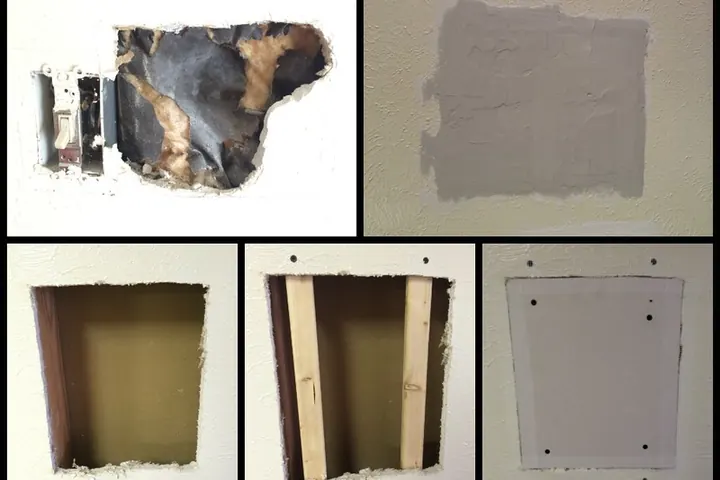
Holes from anchors or door knobs need more. For holes up to a few inches, a self-adhesive mesh patch covered with joint compound works. For larger holes, cut a clean square, add backing inside the wall, and screw in a piece of drywall.
Then tape the seams and apply joint compound in thin coats.
Our steps:
- Remove anchors and nails
- Fill or patch holes depending on size
- Apply thin coats of joint compound and let each dry
- Match the texture
- Prime patches and paint
Texture
Most Rosemead homes have orange peel or knockdown texture. A smooth patch on a textured wall stands out once painted. Spray texture in cans can match, though it takes practice.
See matching orange peel texture.
Paint matching

Touch-up paint only works when it matches the color and sheen. Flat paint touches up best. Satin and eggshell show touch-ups unless the whole wall is painted.
If you have leftover paint from the landlord, use that. Otherwise, take a chip to the paint store to match. Painting a full wall corner to corner hides patches better than spot touch-ups.
Other things to fix
Before moving out, check for loose cabinet hinges, door stops, and broken blinds. Remove wall mounts and curtain hardware you added. A clean, well-patched wall makes the landlord’s walk-through simpler.
For drywall nail pops, see drywall nail pops.
Timing
Spackle and joint compound need drying time, and paint needs at least a day to cure. Plan patching a few days before your walk-through.
Doors, trim and floors
Holes in hollow-core doors from door knobs and impacts can be patched with filler and a mesh backing, though replacing the door is sometimes cleaner. See hollow-core door repair. Scuffs on baseboards clean up with a magic eraser or a fresh coat of paint. Missing door stops are inexpensive to replace and prevent future holes.
Photos and records
Take photos after repairs, in good daylight, before you return the keys. Save receipts. If there is a dispute about deductions, records help.
California landlords must return deposits or provide an itemized statement within 21 days of move-out.
Getting it done fast
When you are short on time before a move, one quote can cover patching, texture, touch-up paint, and removing wall mounts. Tell us what you need, and send photos so we can plan.
Anchors and mounts
Plastic anchors and toggle bolts leave larger holes. Pull plastic anchors out with pliers or push them in and fill over. Toggle wings fall inside the wall when the bolt is removed.

TV mount holes are often large, especially if lag bolts were used in studs. Ceiling hooks for plants leave holes too.
Pulling a plastic anchor straight out can tear the wall. It is usually better to tap it in flush or slightly below the surface, then patch over it.
How move-out patching works
We remove hardware, fill and patch every hole, match texture, prime and paint. If doors have dents or knob holes, we patch those too or install wall stops. See walls and paint.
When you want it done for you, our wall patching and paint touch-ups page lists the jobs we take and what to send for a quote. More on the houses themselves: repair notes for postwar Rosemead homes.
Need a hand with this?
Call or text (310) 628-9399, Mon–Sat 8:30 AM–7 PM. A photo is usually enough for a free estimate.
Call or text for a free estimate