
Smart switches in older Rosemead homes: the neutral wire question
Most smart switches need a neutral wire in the switch box, and many older Rosemead switch boxes do not have one. Check the box before buying. If there is no neutral, pick a switch made to work without one, or use smart bulbs. Adding a neutral means new wiring, which gets its own free estimate; then we install the smart switch.

Smart switches are an easy upgrade on paper. You buy a switch, swap it for the old one, and control the lights from your phone. In houses wired in the late 1940s and 1950s, which describes a lot of Rosemead, the switch box is often missing the one wire most smart switches need: the neutral.
Here is what that means, how to check, and what your options are.
Why smart switches need a neutral
An ordinary switch just opens and closes the hot wire. It needs no power of its own. A smart switch has a small radio and a circuit board that stay on all the time, even when the light is off. Most models get that power from a neutral wire in the box.
Current electrical code generally calls for a neutral at new switch locations, which is why newer houses are easy. Older houses were wired before that was the norm.
Why older boxes often lack one
In many older houses the power runs to the light fixture first. A single cable then drops down to the switch, carrying the hot wire down and back up again. That arrangement is called a switch loop.
Other boxes do have a neutral, tucked in the back with the white wires joined by a wire nut. You can only tell by looking.

How to check your box
With the power off, remove the cover plate and the two screws that hold the switch, and gently pull it forward. Look for:
- Two wires on the switch and nothing else. Likely a switch loop with no neutral.
- A bundle of white wires joined by a wire nut at the back. That is usually your neutral.
- A bare copper or green wire. That is a ground, not a neutral, and it cannot be used as one.
Take a clear photo before you put anything back. That photo is the most useful thing you can send us.
Your options without a neutral
- A no-neutral smart switch. Several brands make switches designed for boxes without a neutral. Code allows a limited number of these as replacements in older boxes that were wired without one. Some need a minimum bulb load or a small adapter at the fixture to keep LED bulbs from flickering. Read the instructions before buying.
- Smart bulbs with a remote. Leave the existing switch in place, put smart bulbs in the fixture, and use a battery-powered wireless remote that mounts over the switch.
- A plain dimmer or timer. If what you really want is softer light or a porch light on a schedule, a standard dimmer or a timer switch may do it without any smart features.
- Add a neutral. Running a new cable to the switch box is rewiring that gets its own free estimate. Once the neutral is there, we can install the smart switch.

What we do on a visit
We turn off the circuit, confirm it is dead, and open the box. If there is a neutral, we install the smart switch, connect it properly, and test it with your app.
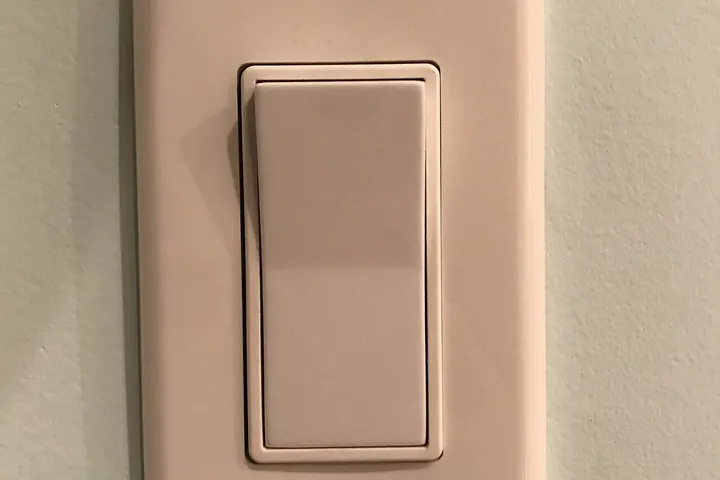

If there is not, we go over the options above and install whichever one you choose, including no-neutral switches where they fit. We also check that the box has room, because smart switches are bulkier than old toggles and crowded boxes are common in older houses.
If we find damaged insulation, scorched wires or anything that looks wrong, we stop and tell you.
What to send us
Send a photo of the open switch box with the switch pulled forward, the brand and model of the smart switch you want, and a photo of the light it controls. If it is a three-way switch, with two switches controlling one light, mention that too.
When you want it done for you, our electrical repairs page lists the jobs we take and what to send for a quote. More on the houses themselves: repair notes for postwar Rosemead homes.
Need a hand with this?
Call or text (310) 628-9399, Mon–Sat 8:30 AM–7 PM. A photo is usually enough for a free estimate.
Call or text for a free estimate