
When an outlet goes dead or a breaker keeps tripping
A dead outlet is usually caused by a tripped GFCI somewhere else or a tripped breaker. A breaker that trips repeatedly means too much load on the circuit or a fault. Warm, scorched or loose outlets should be replaced. Reset once only.


Rosemead homes built in the 1950s were wired for far fewer appliances than a modern household uses. Space heaters, microwaves, air fryers and computers all compete for the same circuits. Dead outlets and tripping breakers are common.
Why breakers trip
A circuit breaker shuts off power when a circuit draws more current than it is rated for, when there is a short circuit, or when there is a ground fault. Common causes are too many appliances on one circuit, a faulty appliance, or damaged wiring.
Space heaters, hair dryers, microwaves and window air conditioners draw a lot of power.
- Note what was running when it tripped.
- Move high-power appliances to different circuits.
- If it trips with almost nothing on, there may be a fault in the wiring or a device.
Resetting a breaker


Find the electrical panel, often in the garage or on an outside wall in Rosemead homes. A tripped breaker sits in the middle position or shows a red or orange flag. Reset it by pushing the handle all the way to off before flipping it back on.
If it trips again right away, there is likely a short or a faulty appliance. Unplug everything on that circuit and try again. If it still trips, stop and call for help.
GFCI outlets
Ground-fault circuit interrupter outlets protect against shock in kitchens, bathrooms, garages, outdoors, and laundry areas. They have test and reset buttons. A tripped GFCI can kill power to other outlets downstream on the same circuit, even in another room.
If an outlet in a bathroom or garage is dead, check every GFCI nearby, including one in another bathroom or in the garage. See garage and patio outlets.
Press RESET firmly. If it will not reset, the GFCI may be bad, or there may be a fault farther down the circuit.
AFCI breakers
Arc-fault circuit interrupter breakers protect against fires caused by arcing in damaged wires or connections. Newer homes and updated rooms have them in bedrooms and living areas. They can trip from damaged cords, loose connections, or some electronics. If an AFCI trips often, it may be detecting a real problem.
Dead outlets
When an outlet is dead but no breaker is tripped:
- Check for a tripped GFCI
- Check whether the outlet is controlled by a wall switch
- Check for a loose plug or worn outlet that does not grip
- Feel the outlet cover; warmth is a warning sign
Loose connections inside an outlet can cause dead outlets, flickering, and heat. Older outlets with back-stab connections loosen over time. Replacing worn outlets with new ones, using screw terminals, is a common fix.
Our steps:
- Identify the circuit and shut it off
- Test that power is off
- Remove the outlet and check connections
- Replace the outlet or repair connections
- Test with a plug-in tester
Two-prong outlets
You may still find two-prong outlets in an older Rosemead house. These lack a ground. A GFCI outlet can be installed as a safety upgrade in many cases, labeled as having no equipment ground.

Warning signs
Call for help if you notice:
- Burning smell or scorch marks on outlets
- Outlets warm to the touch
- Breakers that trip repeatedly
- Buzzing sounds from outlets or the panel
- Flickering lights throughout the house
An outlet also needs replacing when plugs fall out easily, the faceplate or body is cracked or discolored, or power cuts in and out.
Older panels
Some older Rosemead homes have original electrical panels. Some older panel brands have known reliability concerns. If your panel is very old, has fuses, or trips often, have it evaluated; panel work gets its own free estimate.
Load planning
Spread high-wattage appliances across circuits. Avoid using extension cords for heaters or air conditioners. See summer heat checklist.
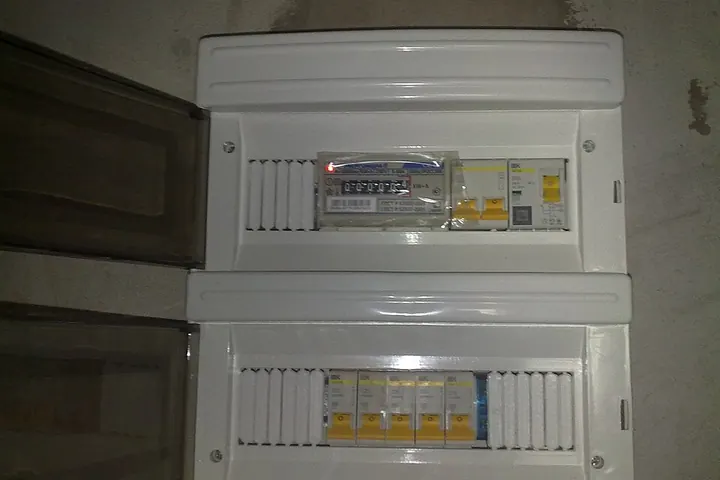

Labeling the panel
A panel directory that matches breakers to rooms saves time. Many older panels have faded or wrong labels. Turning breakers off one at a time with a helper checking outlets lets you make an accurate list. Label it clearly and tape it inside the panel door.
Adding circuits
If breakers trip often because of heavy loads, adding a new circuit may help. Kitchens, home offices, and garages with workshops often need more circuits. That work gets its own free estimate.
Kitchen circuits
Kitchens usually need at least two 20-amp countertop circuits. Running a toaster oven, coffee maker and microwave on one circuit often trips it. Move one appliance to another outlet.
Outdoor outlets
Outdoor outlets should be GFCI and have in-use covers that close over plugged-in cords.
Surge protection
Surge protectors protect electronics from voltage spikes. Whole-house surge protectors installed at the panel offer more protection. Replace power strip surge protectors after a major surge or every few years.
How we trace a dead outlet
We test the outlets and circuits, replace worn outlets and GFCIs, and check connections inside the boxes. If we find bigger wiring issues, we stop and walk you through what we found. See small electrical.
When you want it done for you, our electrical repairs page lists the jobs we take and what to send for a quote. More on the houses themselves: repair notes for postwar Rosemead homes.
Need a hand with this?
Call or text (310) 628-9399, Mon–Sat 8:30 AM–7 PM. A photo is usually enough for a free estimate.
Call or text for a free estimate